Introduction: Tuscaloosa Civil Rights History Trail
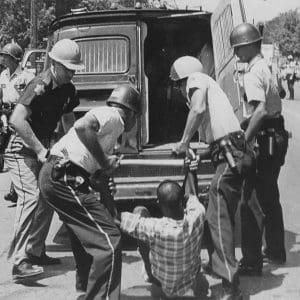
“If you cannot march, you can make sandwiches. If you cannot make sandwiches, you can drive your car. If you cannot drive, you can help with office work. Everybody can do something. WHAT WILL YOU DO TO HELP US WIN FREEDOM?” This is the story of ordinary citizens taking extraordinary action in Tuscaloosa, Alabama.* The downtown portion of the Tuscaloosa Civil Rights History Trail focuses on events surrounding “Bloody Tuesday.” On Tuesday, June 9, 1964,
Stop 1: Capitol Park 2800 6th Street
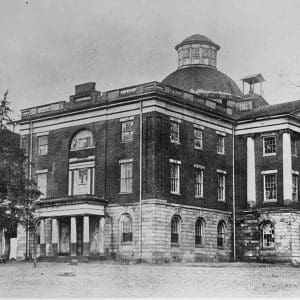
Tuscaloosa was the seat of Alabama State government from 1826 to 1846 when the state legislature met in a building here in Capitol Park. In 1833, the legislature enacted slave codes to regulate the lives of enslaved people as well as free per sons of color. These codes, like those used widely in other southern states, reflected white views of blacks as undeserving of basic human rights and strictly regulated slave travel, education, employment, and
Stop 2: Lynching and Old Jail 2803 6th Street
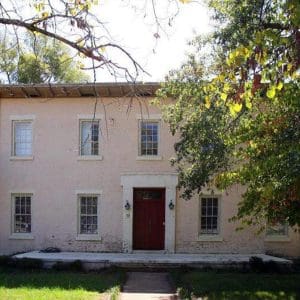
Designed and built in the late antebellum era by William B. Robertson and featuring Georgian, Federal, Greek Revival, and Italianate flourishes, the Old Tuscaloosa City Jail boasts 28-inch-thick walls and heavy floors hewed from local timber. From 1856 to 1890 it served as the county jail and then as a boarding house and private residence. An historic marker on the corner of the property was erected by the Equal Justice Initiative in March 2017. It
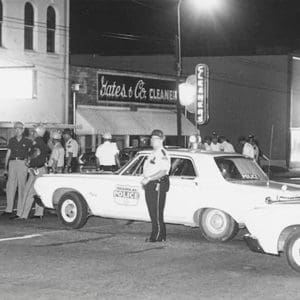
Stop 3: Druid Theatre & Hollywood 2400 Block of University Blvd.
The Civil Rights Act of 1964 ended legal segregation in all public places, including movie theaters. Previously blacks were barred from entering theaters or forced to use separate entrances and sit in the balcony. The other option was to attend all-black theaters. Tuscaloosa was no exception. The Druid Theater and the Bama Theatre served white patrons only. An earlier version of the Bama Theatre-called the Ritz/Capri-had a balcony for black patrons. The Diamond Theater, located
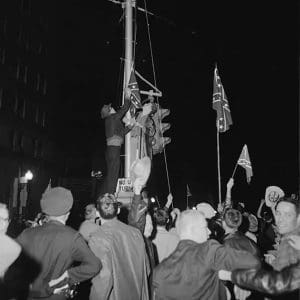
Stop 4: The Mob at the Flagpole 2420 University Blvd.
The flagpole, erected by the city to honor its war dead, was the site of protest during the civil rights movement. It anchors the commercial corner of the city, at Greensboro Avenue and University Blvd. (formerly Broad Street), and has long been a meeting place for citizens. During the attempt by Autherine Lucy to be the first black to attend the University of Alabama in 1956, white students and white extremists twice marched from the
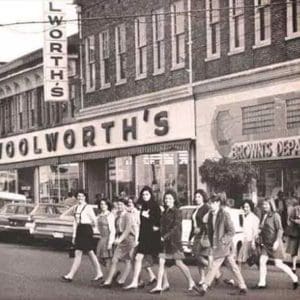
Stop 5: Woolworth and Sit-Ins 2319 University Boulevard
Blacks seeking to protest segregation often turned to sit-ins. Popularized in North Carolina in 1960 as a nonviolent way to call attention to the righteousness of their cause, protesters would ask to be served at all-white lunch counters. If refused, the protesters would simply sit quietly and wait. Violence often came next, as angry whites jeered the activists, threw food at them, and even beat them at times. As part of a local effort to
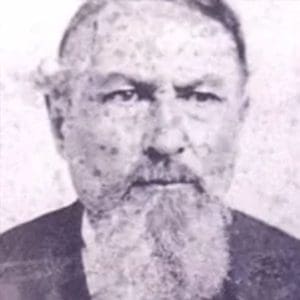
Stop 6: First Black Legislator – Shandy Jones 2328 6th Street
Born a slave in 1816 and emancipated as a young child, Shandy Wesley Jones was a successful barber who bought land with his savings. He pushed for blacks to move to Liberia in the antebellum period but emerged later as a leader of the local black community and started Tuscaloosa’s first black Methodist church (now Hunter Chapel AME Zion) and black school. He was Tuscaloosa’s first elected black representative to the State House (1868-1870), and
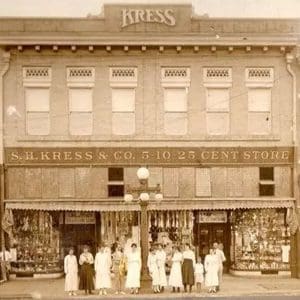
Stop 7: Kress Building and Bus Boycott 2223 University Boulevard
In front of the Kress store the Druid City Transit Company maintained a popular bus stop. On May 5, 1962, six years after the federal courts had ruled segregation on public transportation to be unconstitutional, a white Druid Transit Company bus driver ordered three black Stillman students and a high school student to give their seats to two white riders. An argument ensued. Rev. Willie Herzfeld, a Lutheran minister and civil rights activist, was summoned
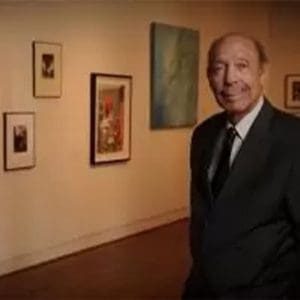
Stop 8: Paul R. Jones Museum 2308 6th Street
Paul R. Jones’s life was testament to his pursuit of justice in an exclusionary society. He graduated from Howard University in Washington, DC, in 1949. Jones applied and was accepted to the University of Alabama Law School-only to be rejected in February 1949 once Jones· identity as an African-American became known. A letter from William F. Adams, Dean of Admissions, made it clear that Jones’ race was the reason for his rejection. Undaunted, Jones fought
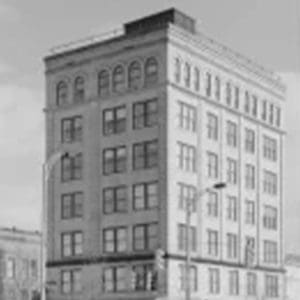
Stop 9: Alston Building & the KKK 2400 6th Street
The Alston Building (also known as the Alston Place Building) is a seven-story office building located on the corner of Greensboro Avenue (originally called Market Street) and 6th Street in downtown Tuscaloosa. Built in 1909 on the site of the former Tuscaloosa County Courthouse, it was praised as Tuscaloosa’s first “skyscraper” and locals bragged that it was the “tallest building east of Chicago on a dirt road.” Its namesake, Samuel Fitts Alston, was a city
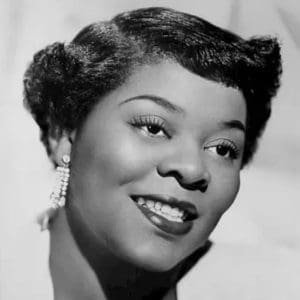
Stop 10: Dinah Washington Cultural Arts Center 620 Greensboro Avenue
Dinah Washington (1924-1963) was a legendary American jazz and blues singer born in Tuscaloosa. With such memorable recordings as “What a Difference a Day Makes” and “Unforgettable,” she earned the title “Queen of the Blues.” She was inducted into the Big Band and Jazz Hall of Fame as well as the Rock and Roll Hall of Fame. On August 29, 2013, Tuscaloosa dedicated the for mer Allen & Jemison Hardware building as the newly renovated
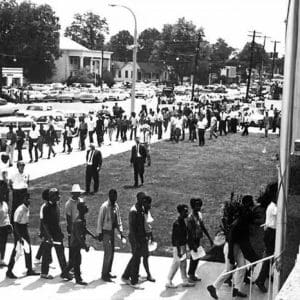
Stop 11: County Courthouse and Marchers 714 Greensboro Avenue
In 1955 voters approved a bond measure to build a $2.5 million county courthouse and jail. During construction, the black community asked for and received assurances that the facility would be completely integrated. But when Gov. George C. Wallace, Jr., formally dedicated the courthouse on April 12, 1964, signs stipulating “white” and “colored” water fountains were in place and blacks were forced to use the restrooms in the basement. Angered by this betrayal, the Tuscaloosa
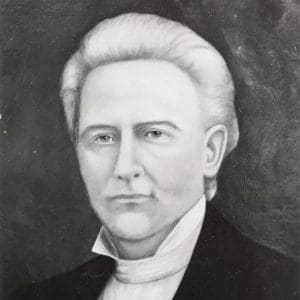
Stop 12: Greensboro Avenue Churches 800 Greensboro Avenue
In Tuscaloosa, four Christian denominations established churches on or near Greensboro Avenue before the city itself was formally incorporated. Collectively they formed a critical core of leadership as the city grew and helped settle the question raised by the Declaration of Independence–are alI men created equal? The churches generally answered “no” and supported the growth of a pro-slavery ideology that defined blacks as naturally inferior to whites. Exemplary of the early church leaders is Dr.
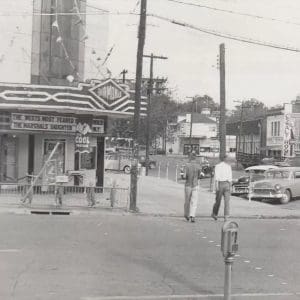
Stop 13: Bluefront District 811 23rd Avenue
A cluster of successful black merchants formed the nucleus of a small AfricanAmerican commercial district near the corner of 23rd Avenue and 7th Street, forming in the years immediately after World War 11. They did so because blacks were denied access to the main commercial centers in Tuscaloosa because of the color of their skin. While most black-owned business were located in black neighborhoods, this area became a small central hub for black clients who
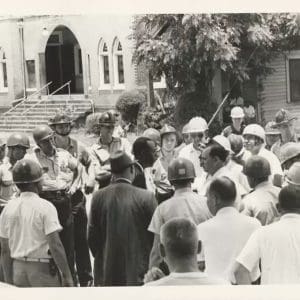
Stop 14: Bailey Tabernacle CME Church 1117 23rd Avenue
Bailey Tabernacle Christian Methodist Episcopal (CME) Church was founded in December of 1870 when the last 45 black members of Tuscaloosa’s First Methodist Church formed their own church. The original church building was designed by the first black architect in Alabama, Wallace A. Rayfield, and was named for Rev. Virgil L. Bailey, one of its early pastors. Bailey Tabernacle played a crucial role during the fight for civil rights in Tuscaloosa. During the “Bloody Tuesday”
Stop 15: Hunter Chapel AME Zion Church 1105 22nd Avenue
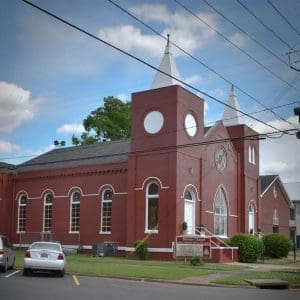
Hunter Chapel African Methodist Episcopal (AME) Zion Church, founded in the 1850s, is the oldest African-American church organized in Tuscaloosa. First known as the Freemen Methodist Society, it was founded by Shandy Wesley Jones, a one-time slave who rose to become an advocate for black literacy and education. Jones won a seat in the Alabama House of Representatives, which he held from 1868 to 1870. In 1866 more than 500 former slaves left First Methodist
Stop 16: First African Baptist Church 2621 Stillman Boulevard
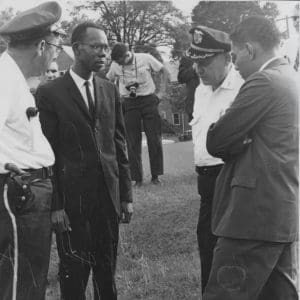
First African Baptist Church played a central role in the fight for civil rights in Tuscaloosa because it was the home church of Rev. T. Y. Rogers, Jr., the most important local leader in the movement; the primary site for mass protest meetings; and the setting for the most violent local incident, known as “Bloody Tuesday.” It sat next to Van Hoose-Freeman, and Mauldin (now Van Hoose & Steele), a black-owned funeral home founded in
Stop 17: Murphy-Collins House 2601 Paul W. Bryant Drive
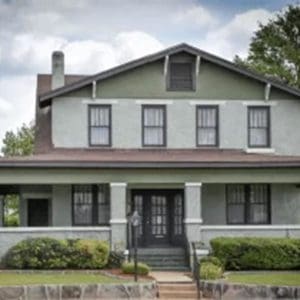
Tuscaloosa’s first licensed black embalmer and mortician, Will J. Murphy hired black contractor George Chopton to build this two-story craftsman bungalow in the early 1920s as his private residence. Materials from the old state capitol building a few blocks away, such as bricks and windowsills, were salvaged when it burned in 1923 and used in the house’s construction. This area was where mainly professional African-Americans lived, with beautiful homes adorned by white lace curtains, which
Stop 18: Howard-Linton Barbershop 1311 TY Rogers Jr. Avenue
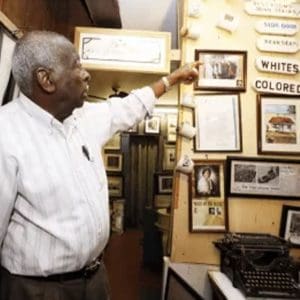
The barbershop was one of the central gathering places for the black community apart from churches. In Tuscaloosa, the Howard-Linton Barbershop was a center for civil rights protest. Long-time owner and civil rights leader Rev. Thomas Linton maintained the story of the local struggle by preserving and showcasing mementos and artifacts in his shop. Beginning in the 1950s, black ministers met here and planned their campaign for civil rights. Autherine Lucy sought refuge here after